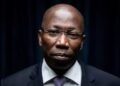
Guinea-Bissau’s main opposition leader, Domingos Simões Pereira, has been summoned to appear before a military court amid growing accusations that he was linked to multiple coup plots, according to judicial and military sources. The move has intensified concerns over political repression and the rule of law following the country’s latest upheaval.
Pereira is the leader of the African Party for the Independence of Guinea and Cape Verde (PAIGC), the historic movement that led Guinea-Bissau to independence from Portugal in 1974 and remains one of the country’s most influential political forces. He was arrested during the November coup that toppled President Umaro Sissoco Embaló, just days after disputed presidential elections plunged the country into uncertainty.
Although Pereira was released from detention last month, authorities placed him under house arrest in connection with separate investigations into alleged financial crimes—charges his supporters say are politically motivated. The military has now escalated the case, claiming Pereira is suspected of involvement in at least two attempted coups, one in late 2023 and another in October 2025. Details of the alleged plots have not been made public, and Pereira’s legal team has yet to comment on the latest summons.
The decision to try a civilian political leader before a military court has drawn quiet concern from civil society figures and opposition supporters, who argue that it blurs the line between military authority and civilian justice. Observers warn that such actions risk deepening divisions at a time when Guinea-Bissau is struggling to restore constitutional order.
Guinea-Bissau has endured chronic instability since independence, suffering five successful coups and numerous attempted ones. Persistent poverty, weak state institutions, widespread corruption, and the country’s role as a transit hub for international drug trafficking have all contributed to repeated power struggles between political leaders and the armed forces.
As the military consolidates control in the aftermath of the November coup, Pereira’s case is widely seen as a test of whether Guinea-Bissau can move toward accountability and stability—or whether it will slide further into a cycle of coups, arrests, and political retaliation.