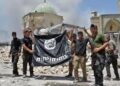
The threat posed by the Islamic State group continues to rise and is becoming increasingly complex, with the situation in West Africa and the Sahel of particular concern, a senior United Nations official told the Security Council on Wednesday.
Alexandre Zouev, Acting Undersecretary-General of the UN Office of Counter-Terrorism, said the group and its affiliates have shown resilience despite sustained counter-terrorism pressure.
“The group continues to adapt, recruit foreign terrorist fighters and expand its use of new and emerging technologies,” Zouev said.
He added that Islamic State has been able to preserve its funding streams through opportunistic fundraising, illegal taxation and kidnapping for ransom.
In the Lake Chad Basin, Zouev said the Islamic State West Africa Province (ISWAP) has further increased its influence. In the Middle East, the group remains active in Iraq and Syria, where it continues to carry out attacks and renew efforts to undermine local authorities.
Zouev warned that the security situation in Syria remains particularly fragile.
Addressing the council, Natalia Gherman, executive director of the Counter-Terrorism Committee Executive Directorate, said that despite major changes across the UN system, the organisation’s core mission of maintaining international peace and security must remain unchanged.
“The United Nations’ efforts to counter the threat posed by Da’esh are critical,” Gherman said. “They require sufficient resources and the cooperation of all member states to achieve our shared goal of a world free from terrorism.”